Those who stood up and united – “The Radium Girls” Book Review

Having finished the last chapter of the book “The Radium Girls”, I was astonished by the stories that occurred in the 1920s in the radium industry. How come those stories were never brought to my sight in the past? Neither did any of my friends or family mention this in the past conversations. But it was such a powerful story that I would urge everyone who cares about the world, life, and justice to read and reflect upon.

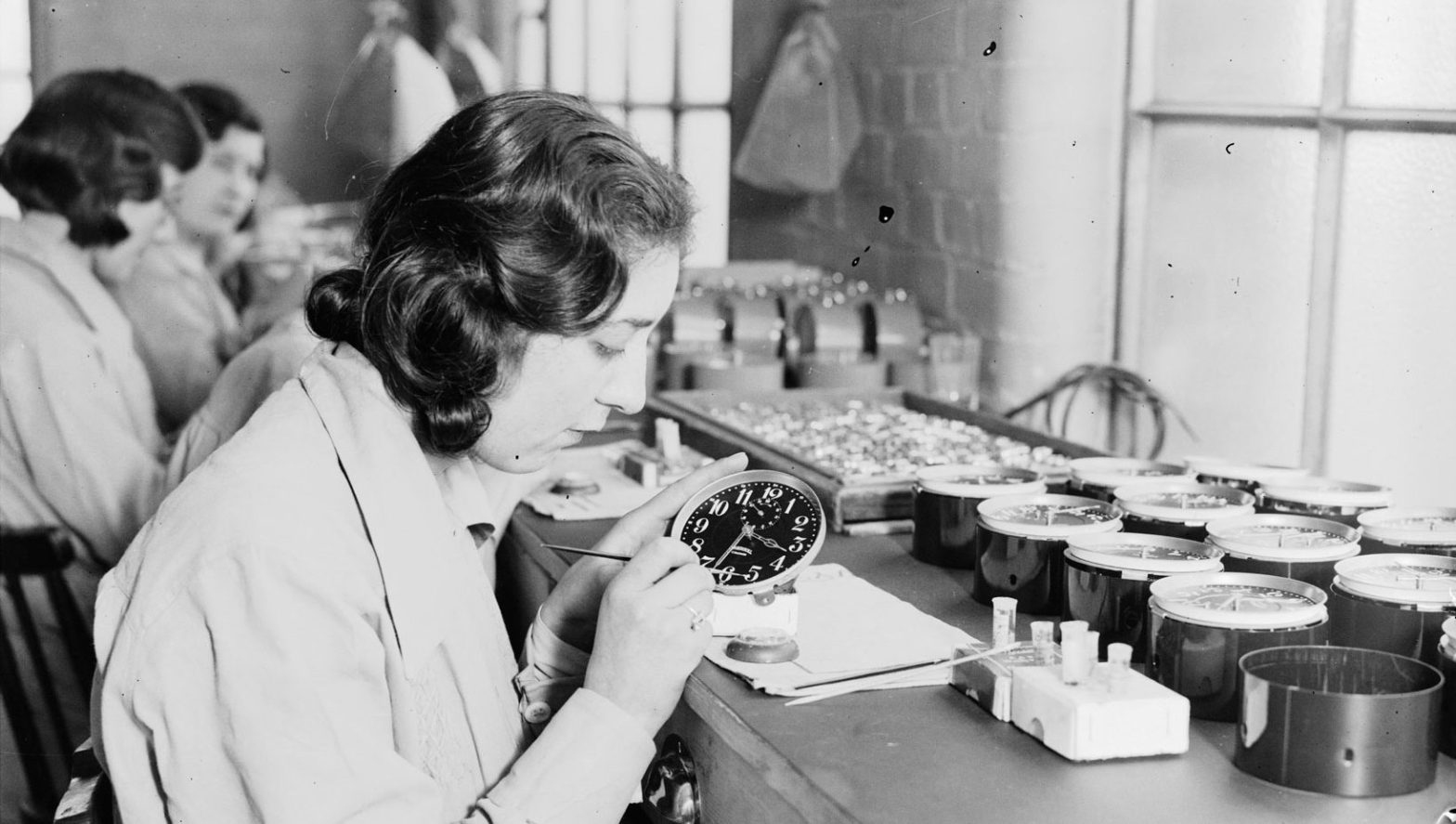
The author Kate Moore depicted vividly one after another the lives of young and pretty American girls in their teens and twenties who joined the watch studios as dial-painters. They were energetic, cheerful with infinite hope to their bright future. And yet, after a couple of years (and some even months) of working and living with radium powders, they started to feel sick. Their teeth became loose, the jaw bone became fragile, and pains rambled over everywhere. Some quitted jobs and stayed home, hoping things would get better. And they didn’t. A scandal of radium poisoning gradually emerged from the water. However, the business owners abused their power and reputation and denied the risk and damage this radioactive matter caused to those young bodies. They put up advertisement on benefits of radium to attract more young souls to work for them, they hid away the victims’ jawbones at autopsies that could point to what they had done to the girls, and they hired lawyers and doctors who had more greed for money than ethics to flip black and white and cover up the crimes.

I almost burst into tears when I saw those brave girls — some were too sick to walk, some were crippled, some with legs or arms amputated — finally stood up and united to fight with this humongous and evil industry. The path to success was never easy, and their fight for justice was even so. Higher up figures refused to help due to their interconnection with the radium industry, most lawyers turned away their requests for fear of getting cut off their business tie, and the rest single digits of lawyers who were willing to represent eventually threw the white flag given the long haul.

But with perseverance, there’s always hope. A handful of doctors, dentists and lawyers risked their reputation and even life to defend for the girls. It took decades, long enough that it couldn’t grant Catherine, one of the fighters of this course and a critical person to the win of the lawsuit, a living body to witness the final triumph.

It was a rough read, as the author led us through the heartbreaking moments of the girls, their families, and all other people who cared about them. I almost dropped the read halfway as I was so depressed about the pitiful lives of the girls and frustrated by the ignorance of the business owners.

Gladly the impacts of those girls didn’t end there, when they won the legal case in the court. New law was established to protect the workers, and new enforcement was imposed to the industries that dealt with radioactive chemicals, including the nuclear industry.

But their personal stories were never carefully revisited since. And I’m really glad Moore let their voice heard by the world, even though it was decades after.

Into Thin Air

The COVID-19 situation gives everyone a brand new way to look at work and life. I started to miss and appreciate the frequent face time and interactions with friends and family, which to us now is a luxury. On the other hand, I started to embrace the time I spend with myself on reading, thinking, and reflecting.

So, I got chance to finish this book recently – Into Thin Air, a journalist’s true story and reflection on a 1996 tragedy on Mount Everest, where twelve people left their body and soul there forever.

Before opening this book, I had a hard time understanding mountaineering as a passion or hobby for some people. There’s huge risk involved, the trails are strenuous, and failure or success is sometimes not at their hands (e.g., team, weather). Basically, it’s a survival game. Why do people do that? And why do people keep doing that and making it as their long-lasting life hobby? Every time I thought about this sports, those questions jumped into my mind, one after another.

Picture taken May 17, 2006. REUTERS/Stringer

The book led us through the journey that the journalist took along with his expedition team members (and other teams), and the more I read into it, the more I understood how much attraction and deep excitement mountaineering could give to people. It’s high risk but high reward. While you are at the top of the mountain, you feel serenity and solidity – the world is yours. And if you’ve conquered some most difficult peaks in the world, there’s nothing more that will stand between you and success/satisfaction in life, for good.

I mean, still, I won’t do it. As conservative as I am deep in heart (as a consultant by training), I appreciate Krakauer’s detailed and thoughtful words on those excited, frustrated and desperate moments on the mountain, which totally transformed how I would depict a mountaineering experience.

The book reminded me of one case study I read during b-school on Mt. Everest. It might have been another tragedy that happened in that mountain (I couldn’t recall the full details), and talked about a similar situation where some team members got stranded up in the mountain and unfortunately died after some desperate attempts. “Little fires everywhere”, the phrase that kept coming to me while I was reading the case study and the book. I still remember that we actually did an in-depth analysis on what led to the tragedy, and what could have been done to prevent this from happening at the first place. Typical b-school approach, huh? But it did have some influence on what I think while reading. I couldn’t help but kept having thoughts around, oh, this is a management issue – should have communicated this with the members even more clearly and strictly kept to the principles, oh, this is an ethical issue – how could they just walk pass the desperate and weak mountaineers who were stuck without at lease making an attempt to help.

Now I think about it, I’ve been too mean. In the end, they are all human beings. When it came to the survival point (live or die), none would have been able to think or react as the most rational person (nor would us if we were put in that situation), not to mention that they were at 27k+ feet high on the mountain with no sufficient oxygen to breathe and think.

There’s one moment that struck me – when Sandy and her quad couldn’t locate the camp on South Col but waiting fully exposed in the wind and hard snow with the hope that the storm would go lighter in hours, or someone would find them and rescue the team. Sandy cried in desperate with the wind blowing hard in the background, “I don’t want to die. I don’t want to die here.”

When some of us are struggling with whether size 9 or 10 fits better on a client slide (and get frustrated out of it), they are experiencing the real life or death moment. So, what are we struggling about, really?

I followed up with a documentary made by the IMAX expedition team that was on the mountain at the similar timeframe. In this documentary, all the characters in the book became real. They talked about what they enjoyed, what they experienced, and what they struggled upon along the journey. People seemed all too sane and neutral from that movie that I almost doubted whether things were that bad as described in the book, until I accidentally caught sight of the amputated arms or fingers of some interviewees.

This is real. So many people lost their lives, arms, fingers, noses, eye sights because of this. But no one regretted the experience, and still many more are en route to this dangerous natural wonder. The good thing is, at the end of the book, Krakauer spent a chapter talking about how people learned from this tragedy and started to take actions to prevent similar things from happening (e.g., more strict guidelines that all clients shall stick to, one sherpa per client, no oxygen bottles on the top to talk the unqualified out of going at the first place etc.).

Everyone has their own belief that they hold on to. And I respect that. One of the professors in my class “bragged” about his experience peaking Mount Everest (sorry to have used “bragged” but that was literally how I felt at that time). When he proudly talk about this, I didn’t get how risky it was but just felt that this professor was really cool. Now that I look back, I pay full respect to this person, who is a high achiever in academia with a happy family, and is still willing to take a significant risk to fulfill his dream.

With all those people having ambitious dreams and willing to even risk their life to achieve those, I started to question myself – what am I doing? Am I wasting my life here staying at my comfort zone and living a peaceful life?

Maybe it’s just everyone has different interpretation of what a good life means.

Becoming: Find the Path to Becoming ME

I recently finished the book, Becoming, by Michelle Obama. Tracing back to her childhood, she was no special than any other kids living in South Side Chicago. Her dad was a city water plant employee, and her mom stayed home taking care of the family. Her high school counsellor never thought she was “Princeton material” and nudged her to think about safer options. But she insisted on forming a path herself regardless of all possible constraints surrounding her.

This book was the story about Michelle Obama, about how she defined her own path, about what made she become who she is today. The more I read, the stronger I felt that this was also a story for every one of us who are independent, ambitious, sometimes naive, but never give in too easily when it comes to our dreams. Many of the struggles she mentioned in the book, I’ve experienced those too. And the book, at times, put me back to my memories and had me reflect on what I could have done to make things better.

I personally like the first half of the book better as it was more “down-to-earth”. It was a vivid capture of what an ordinary young person (more specifically, in her case, a girl right out of school) would see, think, and do in their twenties. The latter half of the book was more about her life as wife of a politician and First Lady. It was interesting to read for sure, but it just didn’t resonate with me as strongly as it did in the first half.

Michelle was already an accomplisher in her twenties – a polished, bright, young lawyer working in a prestigious law firm. Given her performance in the firm, there wouldn’t be much surprise for her to become partner in her early thirties. While from time to time, she had this doubt in mind whether this was the kind of life she wanted, and whether she was doing the right thing for herself.

In her diary, she wrote, “I feel very confused about where I want my life to go. What kind of person do I want to be? How do I want to contribute to the world?” She told her mom that she wasn’t happy with the job but worried about not making enough money if she quitted.

Her mom gave her a piece of advice –

“If you are asking me, I say make the money first and worry about your happiness later.”

This was such a practical advice. I could totally imagine it coming from a mom who sincerely cared about her kid’s life and future but not from an indifferent colleague. There have been so many sayings around “oh, why bother, just follow your heart”. But what are the impacts out of those unthoughtful decisions? The world is cruel, and we couldn’t just expect the best but not preparing for the worst.

This reminded me of another article I read about key characteristics of a successful person. It said that it was always easy to come up with the “why don’t I just quit” idea, but we should hold on to it and be cautious in exercising it. The impulse to quit can come from a lot of factors. It can simply be that we just don’t like the job we are doing. But more often, it’s because we haven’t worked hard enough and done things well enough. We came across challenges, we failed, and it didn’t make us feel good. And that’s why we wanted to quit. With this mindset, no matter how many times we “switched gears”, we still wouldn’t be happy because all we did was just to avoid the failures.

Her mom was right, although she was a bit too blunt. What she was saying, in a more polished way, was that the road to success comes with bitterness, and there will be times you really want to quit. But just hold on a little bit longer and work a little bit harder until you establish yourself and become one of the best in the field (or simply get more money out of it). And then, so many more opportunities will open up for you.

So Michelle listened to her mom’s advice and worked for a couple more years before she eventually quitted and had a smooth transition to a position in city mayor’s office where she started to have significant impact onto the public sector, onto everybody’s daily life.

After Barack Obama entered the politics world, his schedule became packed and unpredictable. Their life became financially better, but Michelle suffered. In this not-to-different-from-long-distance relationship, Michelle was frustrated every time he texted “be right home” and didn’t arrive until two hours later, she was disappointed every time he broke the promise and couldn’t come to family gatherings. She knew that her husband was no longer to herself but also to the city, state and even the nation. But as a wife, a mom, she was not happy and felt lost at this unbalanced relationship.

Their marriage was at one point at the brink of divorce. And she decided to give it one last try and found them a marriage counsellor. Not giving them any concrete solutions, the counsellor granted them a space to be honest with each other and share their thoughts as well as feelings.

The counseling made Michelle realized that she didn’t have to tailor her whole life towards her husband’s, which would likely result in frustration, desperate, irritation once she found that she couldn’t take hold of her husband’s schedule. She could totally set the schedule herself without being too attached to the uncertainties from her husband’s side. She started to set the schedules for their dinner time, the girls’ bed time, and her own activities. It was no longer about whether Michelle could catch Barack for family events, but more the other way around, about whether Barack could catch theirs.

Michelle set a great model of how to become an independent person herself while still being a loving mom and caring wife. When Obama worked in the senate and started to have an office in D.C., Michelle decided to stay out of this and refused to move to D.C. with him, although it did make more sense for them to both move to D.C. and have more time together as a family. She had a job in Chicago and the two girls went to school in the city. Moving out meant leaving everything behind in Chicago and becoming a stay-home mom taking care of the family. That was not what she aspired to do, and she hoped to still have a little kingdom to herself where she could see her values shine.

These were all big decisions, and Michelle handled them well. Their marriage made it through the crazy travels and campaigning, and she made it to have her own achievement in the field she loved.

Being an independent woman and having a successful marriage/ family, Michelle demonstrated to us that we can stay greedy and have them both.

Also from that article about success, a successful person usually has almost too much self-belief. “Almost too much”, I laughed while reading this, but it was true. Having a little bit more faith in ourselves and our life partner will give us such precious encouragement to just give things a try. We will never know whether it will eventually work out if we don’t bother trying it out, right?

Co-opetition: A Business Game That’s No Longer Us vs. Them

This was one of the optional readings assigned by my professor in one of the business strategy classes back in grad school. I read business books, but I’d never put my emotions in. To me, reading in another sense is like dating. I meet with the authors and the characters, get to know them, and live their memories along with them. Needless to say, some of the business books are really useful with tools enclosed, while the tones of most of them are just cold.

In this sense, this book is also cold. However, I would still recommend it as it was not a dull read. The book had some good perspectives on competition and customer retention enriched by interesting real world examples. The book was also not too thick so it can be positioned as something we can casually flip through and get something out of it.

The key essence of the book is that in the business world, the competitors can also be your complementors. Don’t treat them as pure enemy, as their existence and the potential collaboration opportunities can be beneficial to our business.

Some good learnings:

  • It’s a perception game: the world is built upon perceptions of perceptions of perceptions. Whatever business decision we make, we should think about how they perceive the game, and how they would perceive how we perceive the game.
  • Understand our value add to the market is essential: What value did we add by entering the game? We will be able to get a sense by picturing a market with and without the existence of our business.
  • To a potential market entrant who may enter the market with undifferentiated products – get paid to play.
    • With an undifferentiated product, the entrant doesn’t bring additional value to the market but dividing the pie. However, the entrance creates competition, breaks the monopoly, and hence may cause price fluctuations (usually towards a downward trend), which is good for the consumers since they will pay a lower price for the same good stuff.
    • As a result, this entrant, knowing that entering the market may not do much good to themselves in the short run, should try to pursue some “get paid to play” opportunities with the business customers who will benefit from the competition.
  • The “get paid to play” option can be a win-win strategy for both the entrant and the customers if the negotiation goes well. To make it practical enough to operate, the book listed out some types of upfront payment (both monetary and non-monetary) the entrant can negotiate for:
    • Bidding preparation cost
    • Up-front capital cost
    • Guaranteed sales contract
    • Better access to the information or some important people
    • “As long as we match the price, you should choose us”
    • Possibility to bid on other pieces of business
  • Don’t try to win the bid only through low price – it doesn’t do good to our business
    • The customers that are won through low-price bidding are those who are extremely price-sensitive with a lack of loyalty. And they are highly likely to turn to other business partners once they find a lower price elsewhere.
    • In the end, this type of customers may not be the type we want to work with. They may be demanding, constantly bargaining, and not paying bills regularly.
  • Strategize through the supply power.
    • Form coalitions to attract more suppliers to bid. This creates competition on the supply side, and our business will benefit as a customer along this value chain.
    • Undersupply when necessary. Even though sometimes there are abundant natural supply, we (as supplier) can just pile up the inventory and release the supplies in a restricted way to bump up the demand and price.
    • However, we should be cautious to use the “undersupply” strategy because it may ruin our relationship with the business partners, and the undersupply situation may invite other potential suppliers to enter the market.
  • There’s always a battle between higher quality and lower cost. Base the decisions on the marginal increase/decrease of the two.
    • If a littler bit more cost can significantly bring up quality, do it. If by lowering a little bit of the quality, we get a significant cost-cut, do it.
    • (Well, I personally don’t agree to the latter point for ethical reasons)
  • Some tips on building customer loyalty (e.g., how to say thank you to the customers from a business perspective):
    • Don’t simply say “thank you” in cash because people have different value system towards non-monetary gifts (e.g., free air ticket to Hawaii) and there is a lot of arbitrage the business can do to maximize the value while minimizing costs.
    • Save the best “thank you” for our best customers not the newest customers.
    • Say “thank you” in a way that build our business. For example, it can be a referral program, cross-sale product/service promotion, etc.
    • Set up a mechanism so that the customers know what to expect when we say “thank you”. Customers don’t like surprises.
    • Don’t forget to say “thank you” even if we are in monopoly. First of all, the monopoly stage may not last long and we will face competition sooner or later. Secondly, being at monopoly is the best timing to say “thank you” to the customers because we are able to access the largest possible customer base and build loyalty early on.
    • Also, don’t forget to say “thank you” to our suppliers. We need to make sure that our suppliers will stick around and give us the best product and price.
  • One important and effective way to shape the perception is to send signals.
    • An employee who is willing to take on a low-base high-bonus salary structure indicates that he performs.
    • Giving service guarantee signals that the company’s service is good.
    • Spending significant amount of money on marketing indicates the company’s confidence on its new product launch.
    • Remember, what we don’t do sends a signal to the market too.

“Surely You’re Joking, Mr. Feynman.”

I’m not a science person. I did study Mathematics back in undergrad and was involved in some topology projects, but I’m afraid that was my last real encounter with the hard-core scientific world. However, I’m always curious about science, about how things work and why they work that way.

A friend of mine who’s doing Ph.D. recommended me this book series of Richard Feynman, a well-known physicist in the 20th century who received the Nobel Prize at the age of 37 (over-achieverrrr!), and who, apart from his full-time academic career, held a personal painting exhibition, played drums in numerous occasions including some ballet performances, and claimed his fame as a safecracker back in the days when he worked in Los Alamos.

A truly intelligent person knows how to manage his/her time effectively and is usually surprisingly good in multiple fields apart from his/her core. Feynman is undoubtedly one of the few.

I was a bit hesitated to open the book because I just couldn’t imagine how reader-friendly the content could be with the author being a full-time world famous physics professor. The technical aspect of any of his academic work could totally drown me. My friend encouraged me to give it a try, “It’s basically a book for everyone!”

Indeed, it was an easy and delightful read. Feynman’s sense of humor was vividly shown on the paper and made me laugh out loud at times.

Nevertheless, my feeling towards this book was a mix of love and hate – he had a complicated personality that often annoyed me. I didn’t at all agree with his values towards the relationship, and his sexual promiscuity certainly fit himself into a stereotype of a typical over-achiever (didn’t mean to offend anyone). Additionally, he was just sometimes too smart and his impatience to showcase his exceptional intelligence earned him some good rolling eyes.

Otherwise, I really liked the book. Some very good learnings I’d like to share:

  • Don’t fully rely on the schools to teach us things. We need to be proactive in learning and self-teaching through readings, watching videos, going to the lectures etc. And this is the secrete to becoming outstanding among the peers.
    • Only after Feynman studied advanced calculus by himself during his leisure time at graduate school did he realize how much easier it could be to solve complicated integral problems. And the useful tools in that book were never taught in class. Because of these tools, he became popular among his peers as he was on the top of the list every time they encountered difficult integral problems.
    • His friend in Maths department recommended him this book over a casual conversation. And these opportunities didn’t come at random, instead, he earned it himself. Apart from working on his concentration (Physics), he actively participated in study groups in fields he had no expertise in, which earned him a good number of fresh cross-disciplinary perspectives.
  • Always stay curious and be bold to question the unquestioned. There’s nothing wrong with being a mindful follower (who knows what they are doing and why they are doing it), but a blind follower (who follows either because other people are doing it or because it seems to be a shortcut to success) may eventually have their time and efforts wasted.
    • Feynman gave a casual example. He bumped into a painter and the painter told him he could get the color of yellow by mixing red and white paints. Despite of the expertise of that painter, Feynman challenged him and paid for the painter to get the paints to do the experiment. Those who overheard the conversation told Feynman it would be a waste of time and money because that painter was the expert. It turned out that Feynman was right, and that it was the painter who remembered it wrong.
    • It’s common for us to feel the kind of pressure when in conversation with some big figures. Our inner voice would come out and tell us to keep the mouths shut and just listen and follow. But it was those who had the gut to break the mold that created history and advanced the development of the society.
    • The book also mentioned that, when Feynman was a junior staff, the big figures often asked to have him in the meeting because he was the only one in their working group who wouldn’t fear the power and authority and spoke up whenever he had questions.
  • Don’t lock ourselves in just one field. It’s great to be an expert in a vertical domain, but we also need to keep an open eye to the rest, which is usually 99.9% of the world. The world is no longer flat, and the cross-disciplinary perspectives make us a better person both professionally and personally.
    • Apart from his relentless efforts to mingle with students from other fields back in graduate school, Feynman explored multiple fields (such as Biology) after he became Caltech professor. He spent a summer in a biology lab just to get some new perspectives, and he went to Brazil for research during his sabbatical, which got his Portuguese very well polished. It didn’t mean he was going to start fresh and leave behind everything in the past; instead, the new try-outs, combined with his past experiences, opened some new windows for him.
  • When we find something is hard to understand (especially some abstract theoretical stuff), making analogies is one quick way to save us from getting stuck.
    • Feynman studied some Maths but couldn’t speak the same language with those Ph.D students majored in Maths when he was at Princeton. One trick he always used was that he would ask the students to give him a specific example or analogy of what the theory indicated. Concrete examples helped him relate the unknown to something he definitely knew. Based off that, he could either come up with counter examples to challenge the theories, or follow up with more examples to beef up his understanding of the theories.
    • I believe this is also why he taught so well as professor, because he was able to interpret complicated definitions through understandable and vivid examples. This is what makes a professor from good to great – he was able to not only deal with the complicated, but also pass the knowledge onto the next generations in a simplified way.
  • How to nudge those successful people to share their experiences and secrets to success with you? Make them proud.
    • Feynman shared one story about how his father, a salesman, figured out the tricks of a mindreader they met at a carnival. They found this mindreader who could always guess the colors and names right but none of them was able to find out how. As a result, his father went up to the mindreader for a private conversation, and soon came back with a whole lens of the tricks the mindreader used. Feynman wondered how, and his father said, “I just went to applaud his work, and he got so excited and proud that he couldn’t help sharing everything with me.”
    • Therefore, don’t hesitate to give a little bit of (or more) compliment and applause, and we may be able to get more than we expected.
  • Find something that make us feel living, and dedicate our life to it.
    • Feynman said explicitly in his book, “I don’t believe I can do without teaching. At least I’m living; at least I’m doing something; I’m making some contribution.”
  • Know who we are, and set our own expectations, regardless of what other people think about us.
    • Having gone through some tremendous psychological burdens, Feynman realized, “I have no responsibility to live up to what other people think I ought to accomplish. I have no responsibility to be like they expect me to be. It’s their mistake, not my failing.”
  • Feynman ended the book with one last chapter emphasizing scientific integrity, and I wanted make this an ending to my article as well. I’ve heard so many ugly stories triggered by lack of integrity in both the science and business world: intentionally manipulate the data to make the experiment results fit; cheat on financial and operational numbers to maintain a good stock rating; sell the products that don’t work as good as what they claimed in the ads…And most of the time, they need a bigger lie to cover those in the past, and the snowball keeps growing.
    • “I have just one wish for you – the good luck to be somewhere where you are free to maintain the kind of integrity i have described, and where you do not feel forced by a need to maintain your position in the organization, or financial support, or so on, to lose your integrity. May you have that freedom.”

The Great Enterprise: The Manchu Reconstruction of Imperial Order in Seventeenth-Century China

This book was a long read, and it was not an easy one either. It took me almost a month to finish it, and from time to time I felt the impulse to flip back a couple of pages to check the earlier stories of that person that was mentioned later in the book again in some other occasions. This book was good in a sense that it was a comprehensive coverage of the history in the period of late Ming and early Qing Dynasty with solid references and research behind it. And what the author, Frederic Wakeman Jr., made it unique was that he was able to fit the history into the background of the global development and comment on how the history influenced the world and vice versa.

On the other hand, though, the read would be tough if you don’t have much knowledge in what happened during that period in China. I only briefly learned the history when in elementary and junior high school, and almost couldn’t recall anything but some major milestones. Apart from the major events, this book introduced many anecdotes and detailed stories of those figures that the author believed played a role during that period. As a result, there appeared to be a lot of names which made me really difficult to memorize (especially that I’m not the kind of person that is extremely sensitive to names). Additionally, although the chapters followed the overall timeline, there were some places where the storyline was organized by a policy concept or around certain characters, which lost me a couple of times.

Of course, I paid extreme respect to this grand work. Never have I seen any other English literature that peeled the layers off and explained the history of this period in this detail. And it was definitely a time-consuming work which required a lot of patience for the author whose mother tongue was not Chinese to read through all different materials in ancient Chinese either by himself or through translators.

Dorgon (1612-1650)

Some good learnings I definitely wanted to share:

  • To make the important functions, such as the military, work, we need to make sure that the teams’ basic needs are fulfilled (e.g., the people are sufficiently paid, the necessary equipments are provided)
    • One of the key reasons that caused the collapse of the Ming Dynasty was that the salaries were far from enough for the soldiers to survive (which was caused by both the internal and external reasons), thus leading to protests/ riots from the soldiers and the chaos in the local community (since many soldiers started to rob the civilians to make ends meet) In that case, the soldiers were not satisfied, and the civilians were not either, which partly led to the locals’ genuine hope for a reform or, more directly, a new ruler. When the Dorgon troops came in, many civilians warmly welcomed them and gave out free food and drinks – as you can see, how disappointed they were about the then Ming Emperor.
    • Additionally, the lack of loyalty and practice of the soldiers directly made the troops unable to fight and soon lost the battles.
  • There needs to be a mechanism in place for the rulers to listen to the locals (including the local leaders)
    • One problem of the Chongzhen era (the last emperor in the Ming Dynasty), which contributed significantly to the collapse of the kingdom, was that he had little trust of the outside people but the officials that worked directly with him in the palace on a daily basis. As a result, fewer proposals and comments from the “outsiders” could be passed onto the king, and the trusted officials only brought up issues that catered towards their own interests. Not only did Chongzhen’s perspectives get twisted, but it also gradually fostered the trends of picking sides and bribery from the lower level officials.
  • It’s always easier to win over a territory through military power, while there’s another battle that the rulers have to win but is tougher: the hearts and respect of the people
    • When Dorgon (the one who ended the Ming Dynasty; he was never a king though) established the Qing Dynasty, he decided to waive the death penalty to the officials who previously served the Ming emperors. Instead, he actively recruited some capable Han people to serve in his term for two reasons.
      • First of all, in the new empire he conquered, Han was the majority. They shared significantly different living patterns and culture. He figured the most effective way was to let their people rule their people.
      • Secondly, he wanted to clarify his attitude towards ruling this country. By not punishing the “old” officials but placing them in important management roles, he was able to attract more capable Han people to help him and get more buy-ins from the Han civilians.
    • And indeed, many of the Han people he recruited didn’t let him down: some helped him win a number of important battles in the following years, and some proposed effective policies to rule the country.
  • What caused the new empire in turmoil at times was the constant tension between the Manchu and Han people – racial disparity remained a huge problem no matter which country and era we were in.
    • Although Dorgon promoted quite a number of Han officials, he, at the back of his mind, didn’t fully trust the Han people because after all they were of a different race. His growing suspicions created a ceiling for the Han officials: no matter how hard they worked and how many achievements they made for the new emperor, they knew that they would never be able to sit on the same seat with the Manchu people. And of course, some Manchu officials took advantage of this disparity as well. When similar cases happened again and again, it brought down the loyalty of the Han officials, and some of them eventually decided to put on the “Ming” hat again hoping to (help) establish a new empire where they could be fairly treated.
  • To be liked by the king and respected by other people, one needs to work hard to gain the credentials by making tangible achievements. Only by showing that you are capable will you be able to ask for more (e.g., benefits, promotions).
  • Featuring a personal story sometimes is way more effective than other methods say, war, to unite the people.
    • This book shared a number of cases where the Han gradually believed in the new emperor because of some personal anecdotes they heard about the emperor and/or the loyal officials. They started to unite and support the new emperor not because they were forced to but that they believed the emperor was a capable one and they would have a better future by doing so.
    • Similar examples could be seen in many presidential speeches.
  • We talked a lot about benchmarking these days, but only looking at the successful cases in the past won’t necessarily help pave the road to success. Instead, grabbing on the past may deter the pace of innovation and growth.
    • At the later stage of Qing Dynasty, the country started to lag behind because they only followed the policies and principles of their ancestors as these seemed to work very well in the past. They didn’t realize that although the country seemed to still move forward bit by bit, this was just caused by the inertia. Once some negative forces became visible, the big empire could collapse in one day.
    • Of course, another important reason of the eventual collapse of the Qing Dynasty was that there was no apparent threats outside of the country at their best times. As a result, they didn’t feel the impulse to change and innovate. A learning for us: we should always find a “competitor” out there to inspire and push us to grow and work hard, even if it’s just ourselves.
  • There was an interesting discussion in the book: What is the right thing to do for those “old” officials who were previously loyal to the Ming Dynasty? Should they commit suicide to demonstrate their loyalty and integrity (which a lot of Ming officials did as well as their families), or should they accept the destiny and serve the new empire because, given this open and brilliant new ruler, this would be an excellent opportunity to push forward good policies and grant the people a better world to live in?
    • A deeper question lies: do people believe in destiny? Is the reconstruction of the empire a destiny for them, so they should just accept it, go ahead and embrace it although they may have to bear the reputation of being a traitor?
    • There’s no right or wrong answer. Some did commit suicide and later on was appreciated by the Qing emperors because of their pure loyalty. And some did go ahead and serve the new emperor and became well liked officials who did significant contribution to the welfare of the people and development of the country.

I will probably go back to this book again after reading and watching some more materials about the history of that era. It was a very complicated and interesting era, and there’s a lot (more) for us to learn from.

Bad Blood: Evil Money Can Buy Everything, But Don’t Be That Asshole

The hype of Theranos scandal and its founder Elizabeth Holmes drove me to the reading of this book, Bad Blood.

It was a book about how this smart young lady who dropped out from Stanford founded a company that aimed to fundamentally change the way people draw bloods, which later turned out to be a total lie; and about how she worked her ass off to cover the lies with more new beautiful lies. Her success in raising the funds and gathering people’s attention were not purely out of luck. She was able to always stay at the spotlight – she always wore a black turtle neck just like Steve Jobs did, and her voice was as low and thick as a grown-up man, which gave people a nice perception that this lady was just different in a start-up world where female presence was already low. Additionally, she was really good at networking and getting people (well, more specifically, those extremely important people) to like her.

I don’t want to reveal too many of her stories in the book. Those details, the way she tried to cover the lies, the way she grabbed upon those important people to give her a hand, would only be beautiful after we spend the time reading the book throughout.

I’d like to share some of the key learnings I got from the read:

  • Money can buy most, if not all, the things that a business person want: brand image, perceptions, useful network…Therefore, it’s necessary to accumulate the wealth along the life journey if we really want to achieve something big. Even if some of us are into charity or non profit work, we still need money to make things work.
  • This may seem too practical, but do intentionally build the network. Spend substantial time with the folks that are important and helpful to the business. Don’t do it ad-hoc when we really need help, because the investment takes time.
  • Although Holmes didn’t set up a good role model, it’s still a good practice to learn from the legendary people in the past, on how they started the business, how they handled the challenges, and how they managed the people as well as the growth of the business. Having read this book, I instantly bought a book about Steve Jobs. Holmes copied almost everything Steve Jobs wore and did – not to say her look and working style, she even hired the same company Jobs used to design the ads for her “fake product”.
  • Sometimes we just need to be ruthless at work to push some decisions forward and make the fellows respect and follow our leads. But don’t do it all the time, and that’s why the carrot and stick approach still lives now.
  • Don’t evaluate the performance of the employees purely based on their loyalty and length of working hours. In a world where iteration and efficiency become the key success factors, we need to pay more attention to the employees’ productivity, creativity, and integrity.
  • Be apologetic if we do things wrong in the company especially if we are higher up in the management team. By doing so, we will be able to gain more respect from the employees and build personal connections with them as well. Don’t do that all the time, but acknowledging what we did wrong at some critical points would significantly enhance the employees’ engagement and loyalty to the company.
  • Last but not least, get a good law firm. I was so amazed by how the law firm that Holmes hired flipped the black and white when the public started to question the genuinity of the stories she told. As long as we pay, they could do all the dirty things just to win the case. I’m not blaming the lawyers. It’s just it’s always the case that the smartest folks do the dirtiest things (because they know how to cover it nicely).

Several weeks after I finished the book, the HBO documentary that captured the whole stories was also put online. The visual one could be a good complement of the book, though I enjoyed the paper version more because it gave us more space for imagination.

The Secret To Success: Love Your work, And Keep Doing It

I recently finished a Netflix documentary “Jiro Dreams of Sushi”. I’m always a sushi lover, but didn’t really get chance to dig deeper into the life of a legendary sushi chef. This was not just a food documentary, but more so a story about how to succeed in today’s world where people’s attentions are so easily distracted.

“You have no home to go back to, and that’s why you need to work hard.”

Jiro Ono was born in an unfortunate family. His father used to be a successful businessman and went bankrupted when Jiro was young. At the age of seven, Jiro started to work at a local restaurant and later on moved to Tokyo as an apprentice at a sushi place. His father died at his age of nine, so he rarely received parental care when he mostly needed them. And this unfortunate experience actually made him a more independent and durable person.

He had been in the sushi industry for more than 80 years (as of when the documentary was published). His work attitude was, absolutely, one of the key factors that led him to success.

“He dislikes holidays, because holidays are too long for him. He wants to get back to work as soon as possible.” His old friend described him as an extreme workaholic.

“I love my work…there’s not a time that I thought about quitting… I have made sushi in my dreams, and have sometimes jumped out of bed because of some new ideas that just came up.”

Jiro credited his success partly to his early year experience, “You have no home to go back to, and that’s why you need to work hard.” On the contrary, looking at our generations, he couldn’t help complaining, “…parents tend to tell the kids, ‘ you can return home if you don’t do well.’ And these kids turn out to be failures.” It was usually the toughest times that fostered the greatest heroes.

A good leader needs to be impatient, too

His old friend continued to describe the five essential attributes of a good chef, and Jiro has all of them:

  • They take their work very seriously, and constantly perform on the highest level
  • They aspire to improve their skills
  • They maintain extreme cleanliness
  • They are impatient
  • They are passionate

A good leader cannot be the nicest person in the world, because they need to have the bravery to break the old bricks and constantly push the team to strive for better. Jiro looks like a nice, peaceful old man from the surface though, and maybe this is also why he succeeded – he is an approachable “monster”.

We may simply think the sushi business is all about labor work – as long as they take the time to practice they will be good. It’s not the case at all. What makes Jiro and his sushi great is his extreme perfectionism and strong intention to improve. “It’s never an easy job to work for my father as an apprentice. They work for free but if they stay they will be able to learn all the world-leading techniques. There was one young apprentice who only stayed for one day and disappeared for good.” Jiro’s son mentioned. Jiro asked the apprentice to constantly try and repeat the process until they reach the close-to-perfect state (as there’s never a perfect one, according to his principle). One apprentice cooked egg cakes for more than two hundred times before he finally got a nod from Jiro. And at that moment, “all was paid off.” The apprentice couldn’t help smiling when thinking of this moment.

His perfectionism also applied to his selection of the ingredients and seafood. He would rather skip one type of seafood if they appear to be not of the best than bringing home the second best seafood from the market. His attitude also influenced all the suppliers he worked with, who opted to only sell him the best of the kind. And this is why he changes the menu every day based on what he has, and this is also why people are willing to make reservation a year ahead of time to taste his 3-star cuisine.

On the other hand, Jiro didn’t follow the standard practice in the industry, instead, he created the practice that worked for him best, which later became the industry standard. His constant innovation on ways to cook seafood and rice made his cuisine unique and always ahead of his peers. Whether to massage the octopus for 30 minutes or 45 minutes, whether to cut the fish 0.5 inch thicker or thinner… all are the interesting experiments to him.

What really impressed me was a post-dinner conversation he had with a group of Japanese customers. He paid extreme attention to who the customers were, and adjust the portion as well as the dish setting accordingly. For example, he would intentionally make a larger portion for the gentlemen, and would place the sushi further left on the dish if he found out the customer was left-handed. We just couldn’t imagine this kind of considerable thoughts and attention to detail would be from an eighty-year-old grey-haired thin man.

It’s really difficult to pass a successful business onto the next generations…

His two sons were also his apprentices. They came right after they finished high school. They wanted to go to college, but their father made the life choice for them. Well, it was pathetic to some extent, but maybe it was also why some Asian family businesses lasted longer. His sons didn’t seem to blame their father for bringing them into this business. Both of them were his apprentices for more than twenty years, and the younger one started a new sushi restaurant right next door (and even the layouts and the decorations are symmetric to the one his father owns). The older son worked with his father, because “as the Japanese tradition, the older one takes on the responsibility to continue the family business.”

But will it be that easy for his sons to rewrite the legend and even outperform their father? “It would be a hard reach,” commented by Jiro’s another friend.

Jiro worked hard to equip his kids with essential skillsets to take over and sustain the business, and it seemed like his kids were 80% there. However, as is always the case, the higher up in the ladder, the more difficult to step up, even for just a tiny little step.

I guess this is one of the things that concern most successful businessmen in their late years. They have been too successful in their life, and will their kids be able to achieve the same if not more?


Anyways, I’d highly recommend this documentary. I heard there’s a Japanese restaurant right in my city run by an apprentice of Jiro. I really wanted to try it out sometime.